
Have you ever set a meaningful goal, started with massive enthusiasm, and then found yourself completely paralyzed by 4 barriers just a few weeks later?

As a process engineering manager with over 33 years of experience and a Certified Master Mindset Coach, I have spent decades fixing multimillion-dollar manufacturing systems. In the engineering world, we use a methodology called Six Sigma DMAIC (Define, Measure, Analyze, Improve, Control). Here is the golden rule of that system: you cannot improve a process until you accurately define the problem. If you just try to fix the symptoms without diagnosing the root cause, the machine will inevitably break down again. We will touch on the 4 barriers that could possibly be keeping you from achieving your goals.
The human mind works the exact same way.
Millions of people try to force personal transformation using sheer willpower. They download apps, buy planners, and hype themselves up, but they skip the most critical step: Self-Reflection (the “S” in my S.M.A.R.T. framework). They try to bloom without ever examining the mud they are planted in. But just like the lotus seed that must anchor itself in the dark, heavy mud before it can rise to the surface, you must look inward to understand exactly what is holding you back.
Today, we are going to look at the root cause of self-sabotage. Through my own journey of recovering from childhood trauma and coaching others, I have identified 4 barriers that create our psychological need to feel “safe.” I call this the S.A.F.E. Framework.
Let’s pull back the curtain and diagnose the invisible roadblocks that are keeping you stuck.
The Illusion of Safety: Why We Self-Sabotage
Before we break down the four barriers, you must understand a fundamental truth: you are not broken, and you are not lazy.
Self-sabotage is not a character flaw; it is a misguided survival mechanism. Your brain is biologically wired to conserve energy and keep you safe from perceived threats. When you step out of your comfort zone to pursue a new goal, your subconscious mind interprets that uncertainty as danger. It will actively throw obstacles in your path—like procrastination, perfectionism, or sudden exhaustion—to force you back into familiar territory.
Even if your current situation is miserable, your brain prefers familiar misery over unknown joy because the familiar feels predictable. To break free, you must identify which of the 4 barriers or the S.A.F.E. barriers your brain is using to protect you.
1. S – Self-Belief (Your Internal Standards)
Self-belief is the standard you set inside your own mind. It dictates the ceiling of what you will even attempt to achieve. What is fascinating is how this confidence can shift depending on the situation. You might feel rock-solid and unshakable in your career, but when it comes to setting boundaries in your relationships or pursuing a personal passion, your confidence evaporates.
Often, a lack of self-belief stems from deep-rooted “permanence”—the lie that your current broken state or past failures define your permanent identity. If you experienced childhood trauma or harsh criticism, your inner child may have internalized the message that you simply do not deserve success.
How to break free: You must challenge the evidence. Start looking for “mastery experiences”—areas in your life where you have already succeeded—and bridge that confidence to your new goals. However, if your lack of self-belief is deeply tied to unhealed past trauma, trying to simply “think positive” won’t work. You must heal the root. For accessible, professional cognitive-behavioral support from licensed therapists to help you safely unpack those past wounds, I highly recommend Online-Therapy. It is an incredible resource for rebuilding your internal foundation from the comfort of your home.
2. A – Accepting the Status Quo (Inherited Programming)
We learn our earliest belief systems from the people who raise us. Because children’s brains are highly open to environmental programming, we naturally adopt our caregivers’ attitudes as our default settings. If you grew up in a household that constantly worried about money, feared taking risks, or prioritized other people’s opinions over authentic joy, you likely absorbed those “inherited scripts” as absolute truths.
Accepting the status quo means you are living a life designed by someone else’s fears rather than your own God-given calling. Romans 12:2 warns us, “Do not conform to the pattern of this world, but be transformed by the renewing of your mind.”
How to break free: You must conduct a belief archaeology dig. Write down your limiting beliefs and ask yourself: “Is this belief actually mine, or did I inherit it?” Honor the fact that this belief may have kept your ancestors or caregivers safe, but consciously choose to leave it behind if it no longer serves your authentic purpose.
3. F – Fear of the Unknown (The Comfort of Routine)
The human brain loves predictability. Stepping into the unknown—whether that means starting a new business, pursuing a new relationship, or finally sharing your true self with the world—triggers your amygdala (the brain’s alarm system). This fear paralyzes you, wrapping you in “paralysis by analysis” where you research forever but never actually take a step.
When your brain senses the unknown, your autonomic nervous system often shifts into a “fight, flight, or freeze” survival mode, causing your heart rhythms to become chaotic and impairing your ability to think clearly.
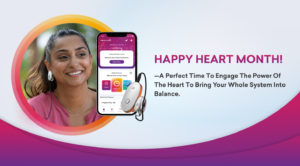
How to break free: You cannot out-think a dysregulated nervous system; you must calm your physiology first. I personally use and highly recommend the biofeedback sensors and training from HeartMath. By practicing heart-focused breathing for just a few minutes, you can bring your heart and brain into coherence, signaling to your body that you are safe. Once your nervous system is calm, the unknown stops looking like a threat and starts looking like an opportunity.
4. E – Experiencing a Lack of Control
Life is inherently unpredictable, and for many of us—especially those who grew up in chaotic environments—that unpredictability is terrifying. To compensate, we try to micromanage everything. We try to control what people think of us, how quickly we achieve our goals, and every variable in our path.
When we inevitably fail to control the uncontrollable, we experience severe anxiety, frustration, and a desire to quit.
How to break free: You must master where you focus your energy. As I discussed in a previous post, The Dichotomy of Control, you must learn to separate what is entirely in your hands (your effort, your attitude, your daily actions) from what is not (market conditions, other people’s opinions). Direct 100% of your energy toward your internal actions, and surrender the external outcomes to God.
Next Steps to Overcome the 4 Barriers
Here is the most beautiful part of the Lotus Journey: you do not overcome these 4 barriers by going to war with your own mind. You transform them by understanding their protective purpose and redirecting their energy.
Awareness creates a sacred pause between a trigger and your reaction. In that pause, you have the power to make a conscious choice.
Your S.A.F.E. Assessment Exercise
Take 10 minutes today to sit in quiet reflection and ask yourself these questions:
- Identify: Which of the 4 barriers (Self-belief, Accepting the status quo, Fear of the unknown, Experiencing lack of control) shows up most frequently when I try to reach my goals?
- Trace the Root: When did I first learn this pattern? What was it trying to protect me from at the time?
- Pivot: What is one small, deliberate action I can take today that proves this old barrier no longer controls my future?
The mud of your past was never meant to be your grave; it was always meant to be your garden. Identify your 4 barriers, take a deep breath, and step into the light.
Rooted in Faith, Rising With Purpose.
Affiliate Disclaimer: As an affiliate, I earn commission from some of the products promoted on this website. However, this does not influence my recommendations on the products or services promoted. I only promote products that can bring value to my audience.
Disclosure: The content on my website is for informational purposes only. I am expressing my opinions of what I have experienced and what has worked for me on my personal journey. The information I write about is NOT designed to supplement or replace professional medical guidance, diagnosis, or treatment.
You should always research and seek advice from your family physician or a qualified healthcare professional for any queries about medical or mental health conditions you might have.
