
Behavior change versus willpower is not a contest of character. Learn why regulation, identity, and systems create change that can hold up in real life.

You made the promise on Sunday night. Less reacting. More prayer. No more spending you cannot explain, snapping at the people you love, or abandoning the goal that matters to you by Wednesday. Then pressure rises, your body tightens, and the old response takes over. This is where the conversation about behavior change versus willpower usually gets painful. You assume the failure says something about your character.
It usually says more about your nervous system, or other reasons you feel stuck in life. If you would like a free resource to help you identify what’s holding you back from the life you want, take the quiz today.
Willpower has a place. It can help you pause, begin, and make a hard choice in a clear moment. But it was never meant to carry the full weight of healing, responsibility, exhaustion, old survival patterns, and a life with no margin. If you keep depending on effort alone, you may produce short bursts of change while quietly reinforcing the belief that you cannot be trusted.
That is not the whole truth of who you are. In Christ, you are not a problem to manage or a failure to improve. You are a person being renewed, with patterns you can name, understand, and rebuild.
Why Willpower Fails Under Pressure
People often treat willpower like a moral resource. If you have enough of it, you will eat differently, speak calmly, save money, follow through, forgive, and finally become disciplined. When you do not, the conclusion feels simple: try harder.
But that conclusion ignores the conditions surrounding the behavior.
A person can know that yelling is harmful and still yell when their nervous system is activated. A person can deeply value rest and still stay busy because quiet feels unsafe. A person can love God, want freedom, and still return to a familiar coping pattern after a hard day. Knowledge and desire matter, but neither automatically overrides a stress-trained body or a mind shaped by old beliefs.
Think of willpower as a manual override in a process. It can interrupt a malfunction for a moment. It cannot, by itself, correct the root cause. If the inputs, environment, and internal signals remain unchanged, the same outcome will likely return.
This is not an excuse to avoid responsibility. It is a more honest starting point for taking responsibility. You cannot rebuild what you refuse to diagnose.
Behavior Change Versus Willpower Is a Systems Question
Sustainable behavior change asks a different question than, “Why can’t I stick with it?” It asks, “What is this behavior doing for me, and what conditions keep producing it?”
That question creates room for compassion without denial. Your late-night scrolling may be attempting to numb overwhelm. Your procrastination may protect you from the fear of being evaluated. Your people-pleasing may have once helped you stay connected or avoid conflict. The pattern may no longer serve your calling, but it didn’t appear out of nowhere.
At Transcend By Faith, lasting change comes down to three gaps: regulation, identity, and systems. When you ignore one of these gaps, willpower gets assigned work it cannot sustain.
The regulation gap
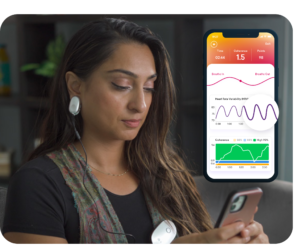
Regulation is your capacity to remain present enough to choose rather than simply react. When your nervous system senses threat, whether current or familiar, it prioritizes protection. You may freeze, fight, flee, shut down, overwork, appease, or reach for relief.
In that state, telling yourself to be more disciplined can feel like asking a smoke alarm to become quieter while the kitchen is still on fire.
Regulation is not about becoming emotionless. It is about helping your body feel safe enough to stay connected to your values. That may look like stepping outside before responding to a text, placing both feet on the floor before a difficult conversation, eating consistently, breathing slowly, or admitting that you are overloaded before you reach the breaking point.
Small practices can seem too simple when your pain is complex. Yet a regulated body gives change somewhere to land.
The identity gap
Many people try to change their behavior while carrying an identity that contradicts it. They say, “I am just inconsistent,” “I always mess things up,” or “I am the one who has to handle everything alone.” These are not harmless descriptions. They become operating instructions.
You will struggle to build a life of steady boundaries if you still believe your worth depends on being needed. You will struggle to rest if you believe you must earn it. You will struggle to follow through if each setback confirms an old label.
Christian faith speaks directly to this gap. Renewal is not performance religion. It is learning to live from what God says is true rather than from the story pain wrote about you. Romans 12:2 calls us toward the renewing of the mind, not the punishment of the self. Your behavior matters, but it is not the source of your identity.
The question becomes: Who am I becoming as I align with God’s design? Not: how do I force myself to look better?
The systems gap
A good intention without a supporting system is fragile. If your mornings begin in chaos, your calendar has no breathing room, your phone sits beside your bed, and you say yes to every request, your system is designed to drain you.
This is not about making life rigid. It is about reducing unnecessary friction between what you value and what you repeatedly do. A system can be as ordinary as preparing tomorrow’s lunch before you are tired, setting a boundary around work messages, scheduling a weekly financial check-in, or creating a five-minute transition between work and family.
The goal is not to optimize every minute. The goal is to create conditions that make alignment more likely when life gets demanding.
A Better Process for Real Change
Lasting change rarely begins at the Bloom stage. It begins in the mud, where the pattern is visible but not yet understood. The Lotus Journey gives language to that process: Mud, Sprout, Roots, Rise, and Bloom.
Mud is honesty. Name the behavior without shaming yourself. “I shut down when I feel criticized.” “I spend when I am anxious.” “I agree to things because disappointing people feels dangerous.” Clarity is not condemnation.
Sprout is awareness. Notice the moment before the behavior. What happened in your body? What thought appeared? What situation repeated? For one week, observe rather than immediately fix. You are gathering data, not building a case against yourself.
Roots is root-cause work. Ask what belief, fear, wound, or unmet need sits beneath the reaction. You may need prayer, trusted support, coaching, counseling, or a difficult but necessary conversation. Some patterns don’t resolve with a planner because they formed in places where you learned to survive.
Rise is the rebuild. Choose one replacement response that is small enough to practice when you are stressed. If you tend to react, your first practice may be, “I need ten minutes before I respond.” If you avoid your finances, it may be opening the banking app every Friday without requiring yourself to solve everything at once.
Bloom is not perfection. It is evidence of integration. You begin to recognize that you can feel discomfort without obeying it. You recover faster after a setback. You make choices that fit the person God is forming, even when no one is watching.
You can read more about this in my book “Transcend By Faith,” which you can pick up on Amazon or Barnes & Noble
What to Do When You Slip Back
A relapse into an old pattern does not erase progress. It is diagnostic information. Instead of saying, “Here I go again,” ask three honest questions: What activated me? Which gap showed up – regulation, identity, or systems? What support would make a different response more available next time?
Sometimes the answer is practical. You need sleep, food, money, boundaries, a clearer schedule, or less access to the thing that keeps pulling you in. Sometimes the answer is relational. You need help carrying what you have been trying to carry alone. Sometimes the answer is spiritual. You need to return to God without hiding, letting His presence steady the part of you that believes you must fix yourself before you can be loved.
Willpower may get you through a moment. A rebuilt life helps you meet the next moment differently.
You are not weak because a pattern has been hard to break. You are being invited to become more truthful about what that pattern has required of you – and more hopeful about what can change. Your calling does not require you to force a new identity into existence. It requires you to receive, practice, and grow into the identity in Christ that has been there all along.
Affiliate Disclaimer: As an affiliate, I earn commission from some of the products promoted on this website. However, this does not influence my recommendations on the products or services promoted. I promote only products that add value to my audience.
Disclosure: The content on my website is for informational purposes only. I share my opinions based on my experiences and what has worked for me on my personal journey. The information I write about is NOT designed to supplement or replace professional medical guidance, diagnosis, or treatment.
Always research and seek advice from your family physician or a qualified healthcare professional for any questions about medical or mental health conditions you may have.
